Universal access to basic sanitation remains one of Brazil’s major infrastructure challenges. While the country continues to face disparities in access to treated water, sewage collection and wastewater treatment, the new legal framework for sanitation has opened the way for a new investment cycle that is reshaping the sector and creating opportunities for engineering companies with experience in complex projects.
It was in this context that Intertechne began to view sanitation as a strategic market for its growth.
Although the company has a strong track record in energy, dams and water resources, in recent years Intertechne has undertaken a structured effort to expand its presence in water supply, urban drainage, domestic sewage collection and treatment, industrial effluent treatment and the reuse of treated wastewater. According to José Pinheiro Machado, Director of Intertechne’s Water and Energy Business Unit, this expansion has taken place gradually, in line with the evolution of the sector itself.
“The new legal framework has created a different dynamic for the sector. We first sought to better understand this environment, establish partnerships and identify where we could add value based on the expertise we had already developed. We are now at a stage of expanding this activity, including the incorporation of Gouvêa da Costa Consultoria e Projetos de Engenharia, a company with 35 years of experience in the sanitation sector,” he says.
This process is already reflected in important contracts. Intertechne is developing the Master Drainage Plans for Uberlândia (Minas Gerais) and Paulínia (São Paulo), participating in urban drainage projects in the Dominican Republic and working on water production and distribution projects for clients in Brazil and abroad. At the same time, the company continues to provide engineering support to sanitation concessionaires on projects involving the safety and maintenance of water-supply dams.
The company’s expansion into this market is supported by a track record built over nearly four decades. Its accumulated expertise in hydrology, dams, pumping stations and water infrastructure enables Intertechne to provide integrated solutions for sanitation projects, bringing together multiple engineering disciplines within a single development.
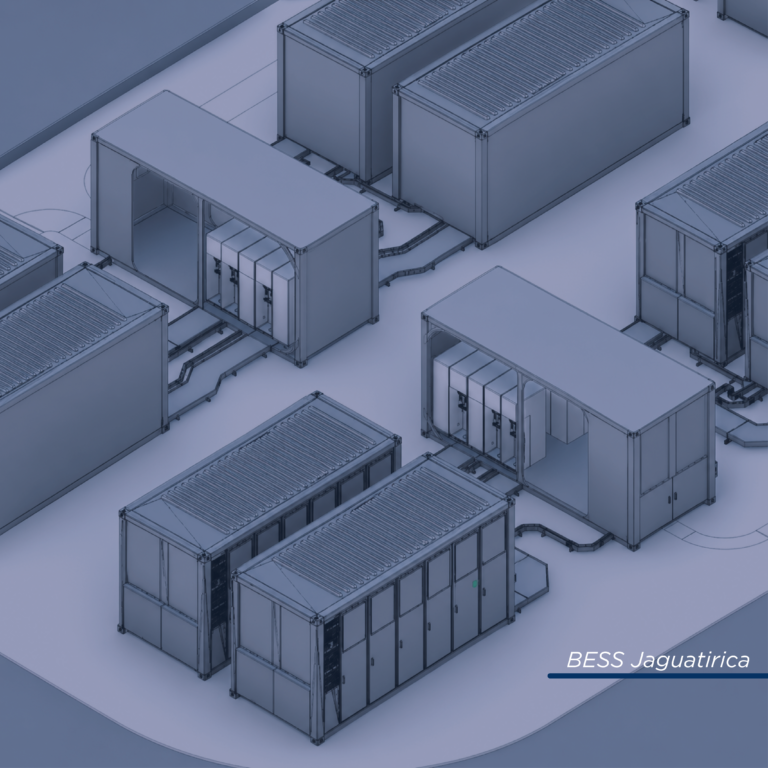
Another key capability is the incorporation of digital technologies into project development. The use of BIM (Building Information Modeling) makes it possible to integrate information across all stages of water intake, conveyance and distribution systems, improving multidisciplinary coordination, increasing design efficiency and supporting better information management throughout the project lifecycle.
The expansion of this business area also reflects the changes taking place across the sector. The growth of concession models and the entry of private operators are making the market increasingly competitive and creating demand for more comprehensive solutions. In response to this new environment, Intertechne is building a dedicated team for the sanitation sector and expanding its technical capabilities across different areas of the industry.
The expectation is that sanitation will become increasingly important to the company in the coming years, emerging as one of its key growth drivers. More than simply expanding its presence in a growing market, Intertechne aims to contribute engineering solutions that support one of Brazil’s major challenges: providing high-quality, efficient and sustainable sanitation infrastructure to an increasing number of people.